
Architectural LED fixtures
LED Pixel Point Lights for Media Façades
GD-P series LED pixel point lights in 30–60 mm housings, 0.72–1.8 W, RGB and RGBW, DMX512 control, 120°–160° beam and catalogue IP67 rating.
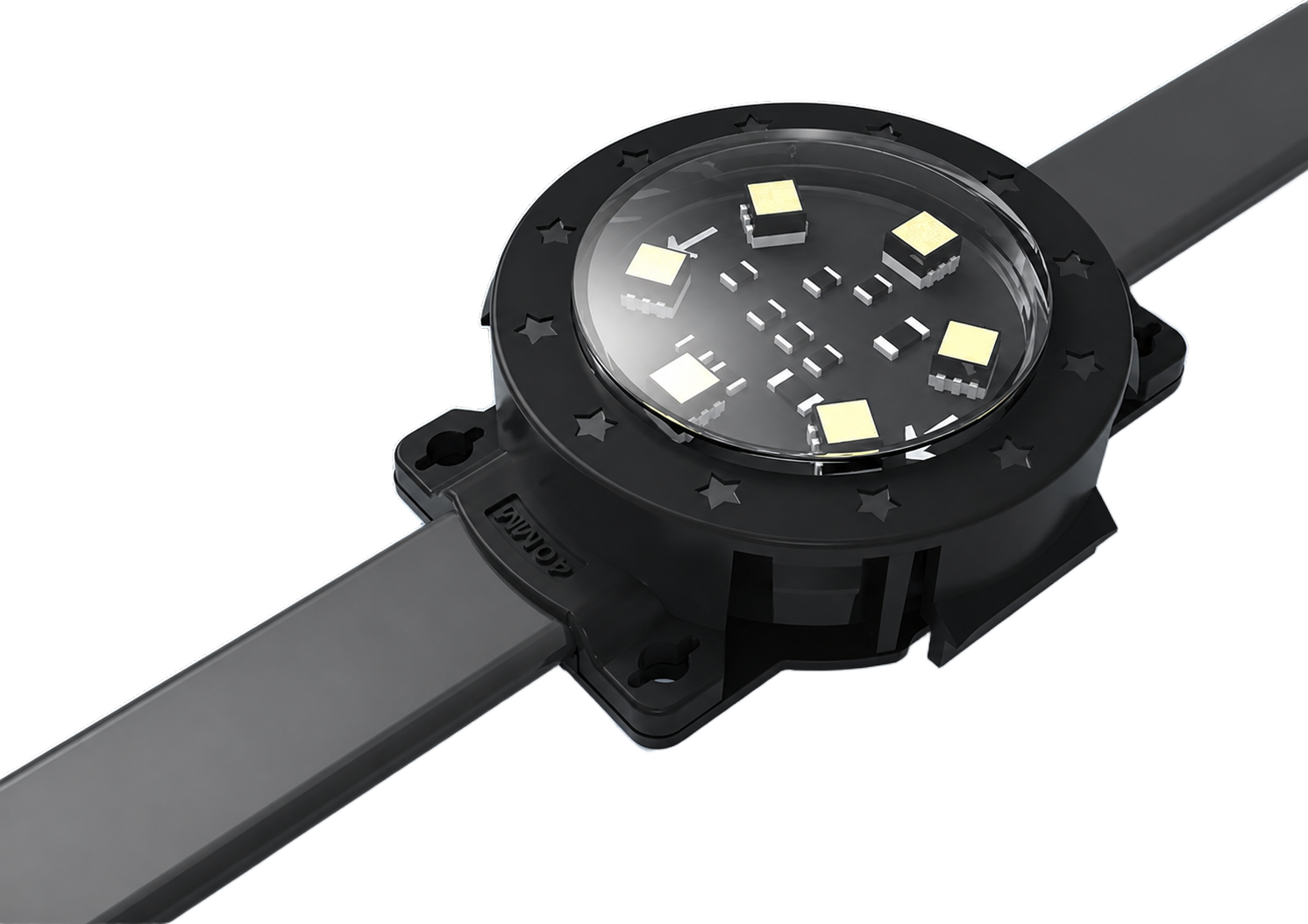
An LED pixel point light is a compact addressable luminaire used to build dot-matrix displays and animated media façades. The GDXC GD-P series includes 30 mm to 60 mm housings, 0.72 W to 1.8 W versions, RGB and RGBW output, DMX512 control and 120°–160° beam angles, with a catalogue IP67 rating for exposed outdoor installation.
Scope: what this product page covers
This page covers compact pixel and point luminaires used for dot-matrix and animated façade effects. It does not cover pixel-controlled linear lights, which are listed under LED linear lights.
Specifications
| Representative models | GD-P3015-03, GD-P3515-04, GD-P4015-06A, GD-P4515-08, GD-P6025-06A |
|---|---|
| Housing size | 30 mm to 60 mm diameter formats |
| Rated power | 0.72 W to 1.8 W, model dependent |
| LED type | SMD3535 or SMD5050, model dependent |
| Working voltage | DC12 V or DC24 V, model dependent |
| Light colour | RGB and RGBW |
| Control | DMX512, 4-wire or 5-wire depending on model |
| Beam angle | 120°–160° |
| Warranty | 3 years |
Materials
- Transparent PC cover
- Secondary encapsulated housing
- DMX512 control IC
- Constant-voltage power supply
Manufacturing process
- Effect and spacing definition Pixel density, viewing distance and mounting grid are defined first. Catalogue descriptions mention 160 mm spacing and 30 pixels per string as standard wiring information, but these are not treated as maximum string, voltage-drop or controller-capacity limits.
- Model and control confirmation Housing diameter, LED count, RGB or RGBW, DC12 V or DC24 V, and 4-wire or 5-wire DMX512 are confirmed against the exact model. The control topology is then agreed as a separate system design.
- Encapsulation and assembly Secondary encapsulation is used to improve sealing for outdoor exposure. Modules are assembled and checked for light colour and control response.
- Addressing support DMX addressing guidance is provided for the project so the animation layout maps to the installed grid.
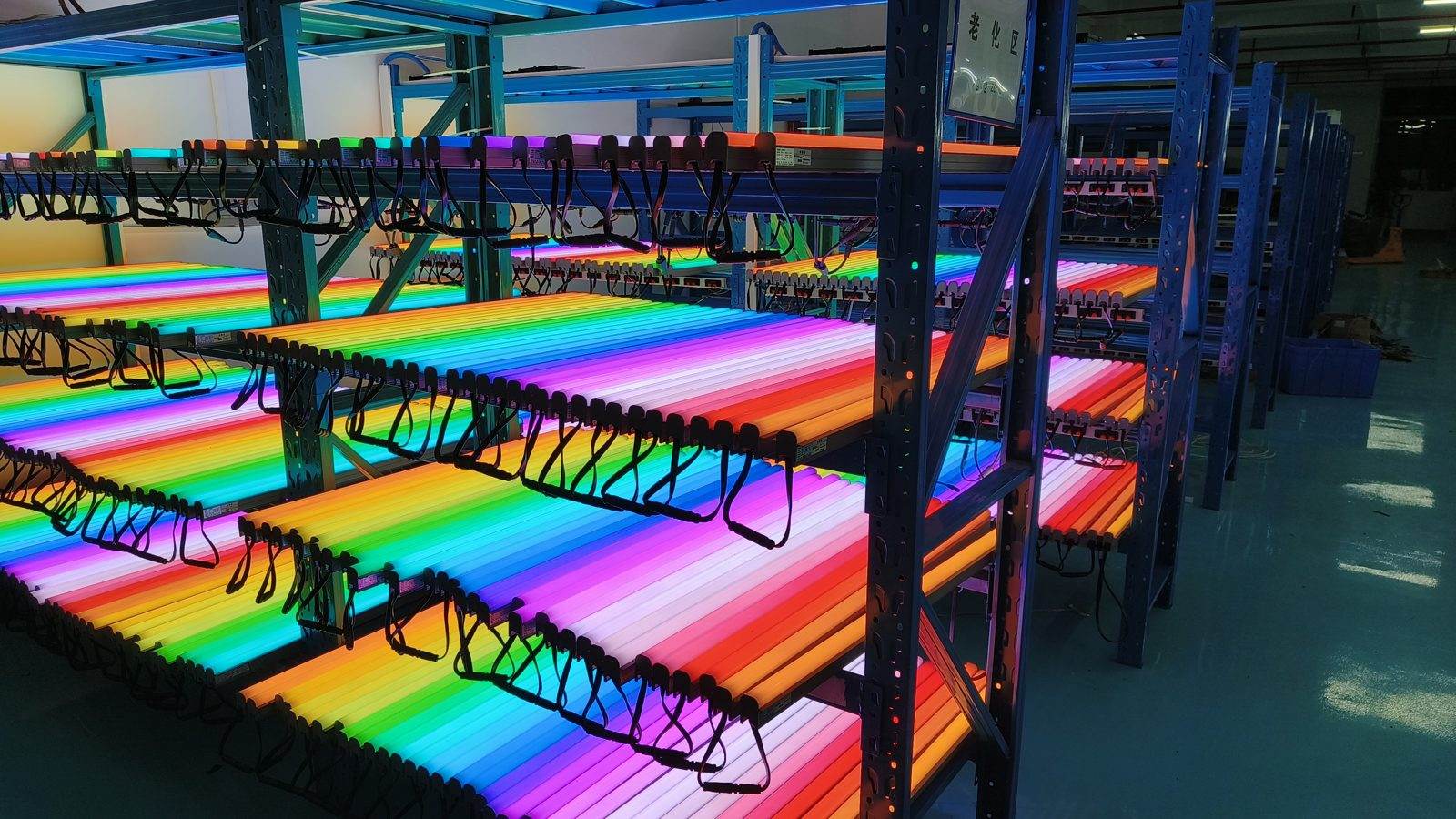
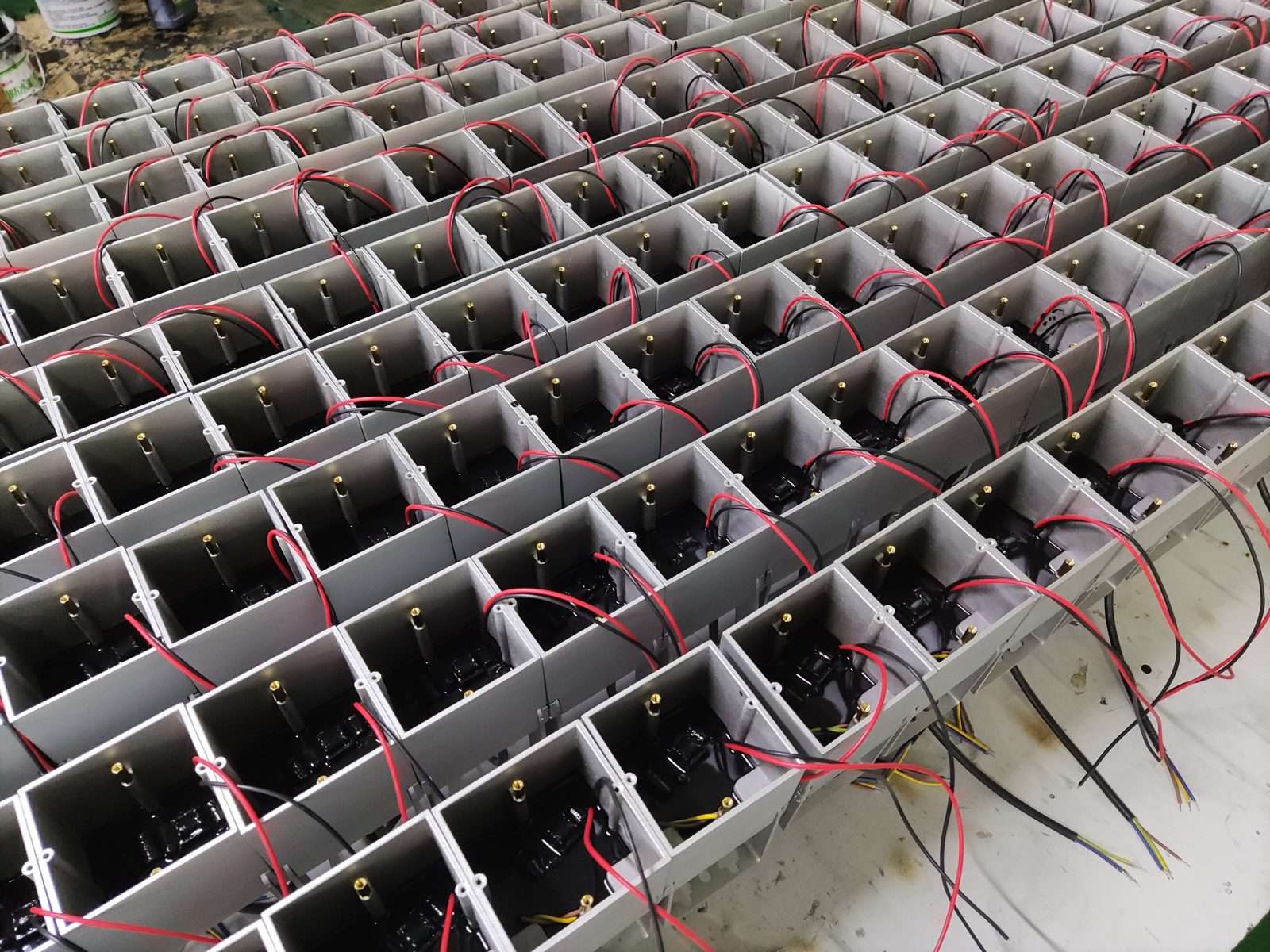
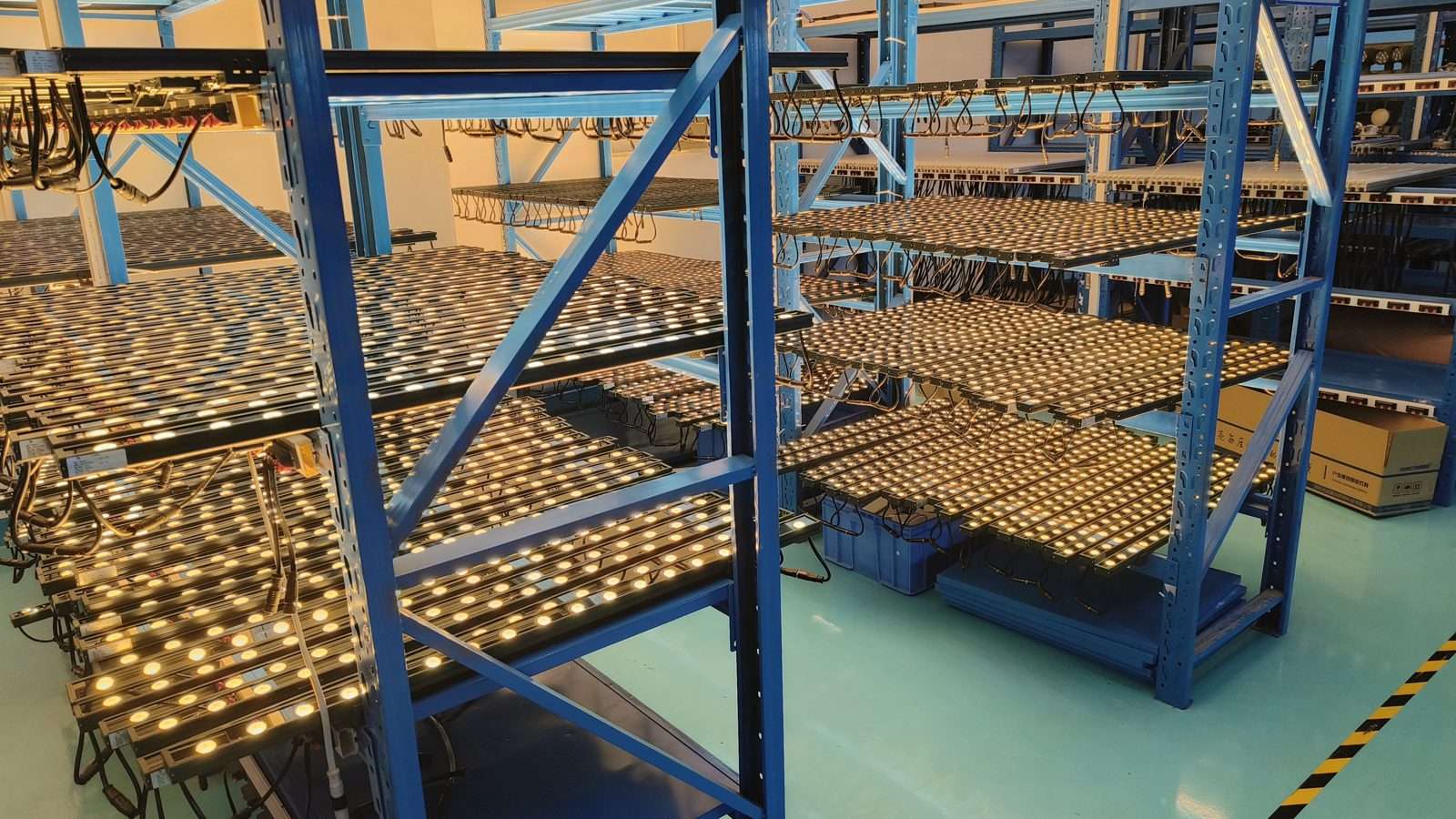
LED Pixel & Point Lights in production
Typical applications
- Media façades and dot-matrix displays
- Bridge cables and structural outlines
- Cultural tourism and night-tour installations
- Commercial building animations
- Decorative signs and grid structures
Quality and documentation
- 3-year warranty on all product lines
- Products comply with CE requirements
- Secondary encapsulation for outdoor sealing
- Colour and control response checked during production
- Batch consistency reviewed for project installations
What we do not do
The catalogue spelling MDX512 is treated as a typographical error; the published term is DMX512 across the affected models. IP67 is a source description, not a published test report. Operating temperature, wiring spacing and pixels per string are catalogue values and must not be used as installation limits without a project calculation. Control system channel numbers are not published on this website.
Technical questions
Do you use DMX512 or MDX512?
DMX512. The spelling MDX512 found in older catalogue files is a typographical error and has been corrected across the affected models.
How many pixels can be placed on one string?
The catalogue describes 160 mm spacing and 30 pixels per string as standard wiring information. Actual string length, voltage drop and controller capacity require a project calculation; those catalogue values are not installation limits.
What is the difference between RGB and RGBW pixels?
RGB mixes colour from red, green and blue LEDs. RGBW adds a white channel. The exact channel set and power depend on the model and configuration.
Can you supply a control system with the pixels?
We provide control system suggestions and DMX addressing guidance as part of project support. Channel counts and electrical ratings of third-party control equipment are not published as GDXC product parameters.
Adjacent products and capabilities
LED Wall Washers
An LED wall washer is a linear luminaire that washes a vertical surface with an even, controlled band of light. The GDXC GD-WW series covers 18 W to 72 W versions in single colour, RGB and RGBW, with DMX512 control, rotating mounting brackets and 30°, 60°, 10×30° and 10×60° beam options for building façades, hotels, bridges and commercial complexes..
View productLED Linear Lights
An LED linear light is a narrow luminaire used to draw a visible line along a building edge, bridge or façade. The GDXC GD-L series includes PC and acrylic versions from 10 W to 15 W on DC24 V, with monochrome, RGB and RGBW options, DMX512 control, 160°–180° beam angles and an IP66 catalogue rating for outdoor outline lighting..
View productOutdoor Reliability
Ageing tests, batch consistency checks and a 3-year warranty on every product line.
Reliability and qualitySend the drawing and effect requirement
Send a façade drawing or site photo with the effect you want. We will propose fixture families, control options and a project checklist — no obligation.